(excerpts)
BATS
Good morning! How the nighttime flew!
Now, may I hang around with you?
HORSES
Nose to nose, hip to hip,
ours is a stable relationship.
EARTHWORMS
We’re perfect together, I guarantee
that I dig you and you dig me.
 Marilyn Singer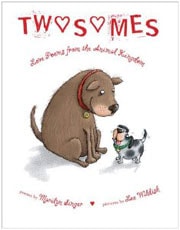
(excerpts)
BATS
Good morning! How the nighttime flew!
Now, may I hang around with you?
HORSES
Nose to nose, hip to hip,
ours is a stable relationship.
EARTHWORMS
We’re perfect together, I guarantee
that I dig you and you dig me.
STAY TUNED…
“Marilyn Singer has written all kinds of great books for children and young adults — picture books, fairy tales, mysteries, non-fiction, and novels — but poetry is her favorite. Singer is on a mission to “knock poetry off its pedestal” and to introduce kids to the pleasing rhythms and powerful emotion of poems, but also to encourage kids to express themselves through verse.”
At the time I compiled this, I had edited two collections of short stories: STAY TRUE: Short Stories for Strong Girls (Scholastic) and I BELIEVE IN WATER: Twelve Brushes with Religion (HarperCollins). Contributors to these two anthologies and several editors from different publishing houses attempted to answer this perennial question.
Marilyn Singer
“The Magic Bow” (Stay True) “Fabulous Shoes” (I Believe in Water)
A short story is, in some ways, like a photograph–a captured moment of time that is crystalline, though sometimes mysterious, arresting, though perhaps delicate. But while a photo may or may not suggest consequences, a short story always does. In the story’s moment of time something important, something irrevocable has occurred. The change may be subtle or obvious, but it is definite and definitive.
In addition, while it is the audience that supplies the backstory for a photo, it is the writer who must give the audience a beginning, middle, and end of a short story. Without that structure, the piece is not a short story at all but a scene, a vignette, a fragment–evocative, yes, but not emotionally or psychologically satisfying.
Gregory Maguire
“Chatterbox” (I Believe in Water)
About twenty years ago I heard someone say that if the novel was a feature film, the short story was a snapshot. I liked that, as a snapshot itself, but when asked to comment, I add that the short story, to me, is a blurred snapshot by an incompetent chronicler, who cannot be trusted as a novelist should be. But the blur, the things one can’t see but can only infer, has implications, too: of movement, of cause and effect outside the range of the print. The snapshot catches a moment in time, but the blur proposes an extension beyond the margins. Emotional, spiritual, psychological, as well as (one hopes) narrative and event.
Jacqueline Woodson
“On Earth” (I Believe in Water)
For myself a short story is fiction that is more immediate and urgent than a novel. I think of it cinematically–the camera zooming in on this one climactic moment, then pulling back on either side of the moment to show all that leads up to and comes after it.
Donna Bray
Editor at HarperCollins, Balzer & Bray
A short story is like the illumination of a match. All the details have to work toward that illumination.
Peni Griffin
“The Truth in the Case of Eliza Mary Muller, By Herself” (Stay True)
A character whose conflict is resolved in under 10,000 words preferably, in the modern market, in under 5,000.
I’m sure your audience would like something more poetic, but there are so many right ways to write a short story that only technical definitions are really useful. Without the character/conflict element, it’s not a story it’s a mood piece, a joke, a vignette, an essay, or maybe a prose poem.
Jennifer Armstrong
“The Statue of Liberty Factory” (Stay True); “The Martyrdom of Monica MacAllister” (I Believe in Water)
A short story is only one of many narrative structures. We create narrative with jokes, ballads, tales, novels, poems, anecdotes, etc. The short story form has been opened up dramatically with experimentation in adult venues, but remains very true to its traditional European roots in children’s and young adult venues. While there are many satisfactions to be found in the conventional beginning-middle-end narrative that is common in short fiction for kids, I believe young readers can respond to many other forms of short narrative. I await the kind of creative fiddling in this form that I’ve seen in novels by writers such as Avi, Karen Hesse, Virginia Euwer Woolf, Walter Dean Myers, etc. So, my answer is that the short story, when we talk about juvenile literature, is a traditionally plotted narrative, which rises to a climactic denouement and resolves in fifteen pages or less.
Virginia Euwer Wolff
“Religion: From the Greek Re Legios, to Re-Link” (I Believe in Water)
I’ve tended to tell my literature students that a short story is probably under 80 pages. (The Old Man and the Sea, clocking in at 94 pages, cannot be a short story; it explores in greater breadth and depth the potential meanings of that fishing trip than a short story could probably do.)
My favorite short story, Nikolai Gogol’s “The Overcoat,” is 32 densely-packed pages in one of my Gogol books.
Easier–of course–to say what a short story is not. It is usually not a profound character study. And it is usually not a one-liner stretched thin like bubble gum. There are the temporal unities, too. See Aristotle.
When I reach my arms way out to my sides and then bend them upward, I can encompass a short story, even such fine, analysis-defying works as Hemingway’s “A Clean, Well-Lighted Place” or Eudora Welty’s “A Piece of News.” But with my arms in that position I can’t possibly reach around Uncle Tom’s Cabin or War and Peace or David Copperfield.
I’d suggest that the richness of a short story is what may come back to us in car-stopping flashes, weeks or years later, whereas the richness of a novel is the kind that never truly leaves us.
But it’s important to add, too, that short stories can change lives as surely as novels can. J.D. Salinger’s “For Esme, with Love and Squalor” added dimensions to the lives of kids of my generation in ways that the great novels did not. I believe that that story and Gogol’s “The Overcoat” are two of the things that let me know in some utterly pre-verbal way that I’d be a writer someday. (If I’d known how to say the words out loud, no one would have believed me.)
M.E. Kerr
“Guess Who’s Back in Town, Dear?” (Stay True); “Grace” (I Believe in Water)
The biggest difference, to my mind, between a short story and a novel is that after you’ve finished a short story, you and your life haven’t changed.
I think a short story is usually about one thing, and a novel about many… A short story is like a short visit to other people, a novel like a long journey with others.
Marian Bray
“The Pale Mare” (Stay True)
Short stories are like Quarter horse racing. Bang! Out of the starting gate as fast as possible and across the finish line before the audience can assemble their thought. The story blindly races forward. But, the author, the horse trainer, has trained very hard ahead of time.
Novels are like Thoroughbred racing. The starting gate snaps open and they’re off, but with more style and grace and planning. Those longer races take a lot of mental grit during the race.
Matt Rosen
Editor, formerly at HarperCollins
The short story is hard to define well. I remember reading a collection of short stories by Jack London, at around age eight, and what thrilled me about some of those stories was not just the fast-paced action and exotic, though not impenetrable, locales, but their digestibility. I could go to bed feeling like I’d completed a whole adventure-very satisfying for just a half-hour of reading. However, what I think I liked the most about them was the fact that there was always something left to the imagination. I valued the room that the author had left for me, the reader, to explore.
Drew Lamm
“Stay True” (Stay True)
A short story is a story that I don’t get or is too short when I do get it and I’m into it! I have never liked them! They bug me. Either I don’t get them and I feel like a kid in school unable to figure out the hidden meanings or I’m totally into it and can’t bear to have it end so soon with so many possible pathways untrod. Like being given only three delicious potato chips out of a whole bag! (For sweet lovers that would be only one lick of an ice-cream cone!)
Sharyn November
Editor, Viking Penguin
A short story collection is the literary equivalent of a Whitman’s Sampler. The reader pokes around to see what’s interesting — reads some stories the way you’d snap up the Truffle or Caramel, flips past others the way you’d put back the Bad Mint Cocoanut Swirl. A short story is bite-sized. Like good chocolate, it’s intense. It’s long enough to make you care about the characters — but it resolves in a way that’s satisfying, rather than seeming unfinished or overdone.
Andrea Davis Pinkney
“Building Bridges” (Stay True)/Editor, Scholastic
A short story is like a good meal–it gives you flavor and just enough to chew on, but leaves you completely satisfied.
**********************************************************
BEST NEW SHORT STORY COLLECTIONS FOR YOUNG ADULTS
Compiled by YA specialist Patty Campbell, who writes “The Sand in the Oyster,” a regular feature about young adult books, for The Horn Book.
Story, n. – A narrative, commonly untrue.
Ambrose Bierce, The Devil’s Dictionary
· Dirty Laundry: Stories about Family Secrets, Lisa Rowe Faustino, ed. Viking, 1998, Eleven original stories by acclaimed young adult writers like Graham Salisbury, Chris Crutcher, and M.E. Kerr. (J, S)
· Doing Time: Notes from the Undergrad by Rob Thomas. Simon & Schuster, 1997; Aladdin, 1999. Ten stories by this popular author about high school seniors who meet epiphanies while doing required community service hours. (S)
· From One Experience to Another, M. Jerry Weiss and Helen S. Weiss, eds. Forge, 1997; Forge, 1999. Avi, Joan Bauer, Joan Lowery Nixon, Susan Beth Pfeffer, Virginia Euwer Wolff and other YA authors share real-life experiences through fiction. (S)
· Ghost Town: Seven Ghostly Stories by Joan Lowery Nixon. Delacorte, 2000.
Mysterious tales based on actual western ghost towns. (M)
· Gone From Home by Angela Johnson. DK Ink, 1998. Twelve poignant vignettes on loss and abandonment, courage and tenderness, by the winner of the 1994 Coretta Scott King Award. (M, J)
· Help Wanted: Short Stories about Young People and Work, Anita Silvey, ed. Little, Brown, 1997. These twelve stories by authors such as Michael Dorris, Ray Bradbury, and Judith Ortiz Cofer deal with an important rite of passage for teens-the first job. (J, S)
· I Believe in Water: Twelve Brushes with Religion, Marilyn Singer, ed. HarperCollins, 2000. A dozen well-known YA authors craft stories from a wide variety of spiritual traditions. (J, S)
· Kissing Tennessee and Other Stories from the Stardust Dance by Kathi Appelt. Harcourt, 2000. Touching stories about the lives of the kids at the Dogwood Junior High School dance. (J)
· Leaving Home, Hazel Rochman and Darlene Z. McCampbell, eds. Harper, 1997; Harper, 1998, pbk. Fifteen distinguished authors like Amy Tan, Sandra Cisneros, and Toni Morrison explore personal journeys. (S)
· Lord of the Fries and Other Stories by Tim Wynne-Jones. DK Ink, 1999. Fast food for the imagination by this master of quirky little tales. (M, J)
· No Easy Answers: Short Stories about Teenagers Making Tough Choices, Donald R. Gallo, ed. Delacorte,1997; Laurel-Leaf, 1999. Sixteen short stories by YA authors about teens facing hard ethical and moral dilemmas. (J, S)
· Odder Than Ever by Bruce Coville. Harcourt, 1999. Outlandish stories from a witty SF author, including the delicious title story from Am I Blue? in which the world is in for some surprises when everyone gay turns blue for 24 hours. (J)
· On the Edge: Stories at the Brink, Lois Duncan, ed. Simon & Schuster, 2000. The queen of YA suspense brings together some literary and psychological cliffhangers. (M, J)
· 145th Street Stories by Walter Dean Myers. Delacorte, 2000. A YA master writer tells us about the folks who live on one block in Harlem. (J, S)
· Petty Crimes by Gary Soto. Harcourt, 1998. Stories from life on the hard streets of the barrio. (M, J)
· Places I Never Meant to Be: Original Stories by Censored Writers, Judy Blume, ed. Simon & Schuster, 1999. YA writers who have been under attack each contribute a story and comment on how it feels to be censored. (J, S)
· Stay True: Short Stories for Strong Girls, Marilyn Singer, ed. Scholastic, 1998; Scholastic, 1999, pbk. Stand on your own two feet and act on your convictions! say these short tales. (J, S)
· Time Capsule: Short Stories about Teenagers Throughout the Twentieth Century, Donald R. Gallo, ed. Delacorte, 1999. In this eighth collection by an award-winning editor each of ten YA authors–Bruce Brooks, Richard Peck, Chris Lynch, and other YA luminaries–draw a story from one decade of the century. (J, S)
· Tomorrowland: Stories about the Future, Michael Cart, ed. Scholastic, 1999. Lois Lowry, Katherine Paterson, Jacqueline Woodson, and other distinguished YA writers explore the future in ten short stories. (M, J)
· Twelve Shots: Outstanding Short Stories about Guns, Harry Mazer, ed. Delacorte, 1997; Laurel-Leaf, 1998. Stories drawn from the way we are with guns in the real world, by Walter Dean Myers, Richard Peck, Rob Thomas, and eight others. (J, S)
· With All My Heart With All My Mind: Thirteen Stories About Growing Up Jewish, Sandy Asher, ed. Simon & Schuster, 1999. The cultural and religious traditions of Judaism provide a rich inspiration for these YA authors. (J, S
· Working Days: Short Stories about Teenagers at Work, Anne Mazer, ed. Persea, 1997, pbk. Fifteen stories about teens in a variety of work situations. (J, S)
· Zebra and Other Stories by Chaim Potok. Knopf, 1998. Stories of teen struggles against the adult world’s rules and regulations, by the distinguished author of The Chosen. (J, S)
KEY: M (middle school); J (junior high); S (senior high)
In 2002, I asked a group of authors, editors, and other book people this question. Here are their responses, along with some of their recommended titles.
A poem is a communication from one soul to another that makes one or both hearts sing.
Walter Mayes. Valerie & Walter’s Best Books For Children: A Lively, Opinionated Guide. Avon, 1998.
What is a good poem?
A good poem is a slip-of-a-thing
that celebrates language, that takes
you on a short journey and touches your heart,
turns on your imagination, or tickles your funny-
bone somewhere along the way.
Nikki Grimes. A Pocketful of Poems. Clarion, 2001. Danitra Brown Leaves Town. HarperCollins, 2002.
A good poem is a blind date with enchantment.
Above all, no matter what its subject matter,
it must possess perfect verbs and no superfluous
words. It must be an antidote to indifference.
The acid test is that you want to read it time and
time again, and not only to yourself. A good poem
begs to be shared with others.
J. Patrick Lewis. Freedom Like Sunlight: Praisesongs for Black Americans. Creative Editions, 2001. A World of Wonders: Geographic Travels in Verse and Rhyme. Penguin Putnam/Dial, 2002.
When I think of a good poem :
Many things come to mind but a few specifically: A good poem makes you feel like you’ve been there before, or want to go. A good poem takes you to the city, to the sea, to the heart of any and all matters; you see it, taste it, belong to it. A good poem is a menagerie of craft; a spinning of sound, word choice, alliteration, rhythm and often rhyme. A good poem is the arrangement of enchantment, or as J. Patrick Lewis says, a blind date with enchantment.
Rebecca Kai Dotlich. Lemonade Sun and Other Summer Poems. Boyds Mills, 1998. When Riddles Come Rumbling: Poems to Ponder. Boyds Mills, 2001.
What makes a good poem? Brevity, terseness, spareness, viewing something new for the very first time, creating an image like no one has ever been blown away by before in their entire life.
Lee Bennett Hopkins. Pass the Poetry, Please, 3rd Edition. HarperCollins, 1998. My America: A Poetry Atlas of the United States. Simon & Schuster, 2000.
Love and care for elemental details, for chosen words and their simple arrangement on the page… and a way of ending that leaves a new resonance or a lit spark in the reader or listener’s mind—that’s part of it.
Naomi Shihab Nye. Come with Me: Poems for a Journey. Greenwillow, 2000. 19 Varieties of Gazelle. Greenwillow, 2002.
A good poem creates a world that somehow touches the reader. That world is built of images that come to the reader through vivid sense details and the music of vivacious language.
Paul Janeczko. A Poke in the I. Candlewick, 2001. Seeing the Blue Between: Advice and Inspiration for Young Poets. Candlewick, 2002.
For me, good poems, ones that I like to read over and over, can bring delight in many ways. Wit, word-play, unexpectedness of word and thought, depth of feeling, word-music, vivid images, the shape of the poem on the page, all bring me joy.
I think poetry should come from the heart of the writer—whether it is light and funny or deeply-felt. Caring—about the subject, the emotion, the act of making the poem—is, I believe, essential.
It seems to me a good poem can rhyme or not rhyme, use similes and metaphors or not, be metrical or free, be as complex as a Shakespeare sonnet or as seemingly simple as a statement by William Carlos Williams. It can be anything the writer wants it to be—as long as it reflects true feeling. And that “feeling” can be just the joy of using words!
Strong, accurate, interesting words, well-placed, make the reader feel the writer’s emotion and intentions. Choosing the right words—for their meaning, their connotations, their sounds, even the look of them, makes a poem memorable. The words become guides to the feelings that lie between the lines. Just-right words make the poem reverberate—and give the reader the joyful shivers!
Patricia Hubbell. Black Earth, Gold Sun. Marshall Cavendish, 2001. City Kids. Marshall Cavendish, 2001.
“Prose = words in their best order; Poetry = the best words in their best order”—Coleridge said it, and I believe it. Poetry IS about words—their precision, texture, beauty (and ugliness). Prose is about words, too, but not in the same way. Prose is about the bigger picture. The canvas is bigger and so are the brushstrokes. A good poem, whether narrated by a character or by the poet her/himself, uses words wonderfully, and it uses them to capture specific moments in a fresh way, a way that makes the reader exclaim with delight, “Yes, that’s it! That’s right!”
A good poem may also ask philosophical questions. In its condensed form, poetry gives these questions an immediacy, a great power to startle and grab the imagination. Poetry is great for asking—and sometimes answering—those questions that come to you just as you’re falling asleep.
Marilyn Singer. Footprints on the Roof: Poems About the Earth. Knopf, 2002. The Company of Crows. Clarion, 2002.
A good poem surprises your senses, shakes you awake, stirs your emotions, and startles your imagination. Each poem is an act of discovery. Poetry helps us widen our vision and our hearts.
Joan Bransfield Graham. Splish Splash. Houghton Mifflin, 1994. Flicker Flash. Houghton Mifflin, 1999.
A good poem awakens the senses, allowing me to see, touch, experience something in a powerful way.
A good poem makes the ordinary and familiar seem extraordinary.
Michele Coppola, former editor, Dutton Books
Personally, I’d say a good poem makes me see something in a new way. It’s fresh and eye-opening. And it’s also compact and intense. One of my favorite quotes about poetry is this one from Arnold Adoff: “I really want a poem to sprout roses and spit bullets; this is the ideal combination…” I think it’s partly the compactness of a poem that, if the poet has a strong vision and command of language, will let it both “sprout roses and spit bullets” at the same time. A good poem doesn’t waste words; it uses them sparingly and meaningfully.
Rebecca Davis, editor, Greenwillow/HarperCollins
A poem for children—what makes it good? Perhaps it comes down to an original voice saying something that sounds almost as if we had never heard it before. Rhythm is the skeleton that holds a poem together, so a strong but still interesting rhythm pleases the ear and tongue. Rhyme, if it is not old tired rhyme, can be funny, explosive or just a neat way of completing a thought in a poem for the young.
Rhyme is also great for reading aloud, and some attention needs to be devoted to the sounds of the words themselves. Last, or possibly first, is the thought, idea, that centerpiece around which the poem is built. Maybe I can boil my answer down to sense and song, a helping of each. And always new and therefore a little surprising.
Karla Kuskin. Dogs and Dragons, Trees and Dreams. HarperCollins, 1980. Moon, Have You Met My Mother? HarperCollins, 2003.
A good poem captures a certain moment, or memory, like a “word photograph.” In one quick reading, hardly more than a glance, a poem can give us a reminder of how Uncle Al never learned to use chopsticks, of how it feels to breathe water, like a fish, in a dream, of how a mother uses her hand to shield a baby’s eyes. A good poem is a photograph capturing the most forgettable and the most unforgettable moments in our lives.
Janet S. Wong. Behind the Wheel: Poems About Driving. McElderry/S&S, 1999. Night Garden: Poems from the World of Dreams. McElderry/S&S, 2000.
A poet is a little like a photographer who shoots a subject from an unexpected angle. Even when its subject has been written about many times (how many new subjects are there?), poetry invites you to consider it from a new perspective. The language a good poem uses is similarly fresh, surprising, memorable—a flavor that lingers on the tongue.
Alice Schertle. A Lucky Thing. Harcourt, 1999. I Am The Cat. HarperCollins/Lothrop, 1999.
I think a good poem is like a vitamin. It’s an encapsulation of a feeling, an image, a new relationship. Packed with energy, it might be playful or serious, but a good poem is always nourishing.
Bobbi Katz. We the People. Greenwillow, 2000. A Rumpus of Rhymes: A Book of Noisy Poems. Dutton, 2001.
Answering that question is like cooking calamari: either do it in five seconds or for five hours.
Any short (or even long) answer to what’s a good poem worries me, as it begs other questions: good for whom? good for when? good for what? I love poems to know and say to myself, silly poems to read once and giggle over, poems that touch my soul even if they hover outside my rational understanding. Of course, there are matters of form, meter, rhyme, scansion, but all the mechanics can only enhance and facilitate a thought, a feeling, an expression of being that needs to be articulated.
So, I don’t know any recipe for a good poem, only a taste test: does it touch someone, sometime, somehow? Then, it will be savored by that person and nourish him or her.
Judy O’Malley, editor, Charlesbridge Press.
There are at least a hundred different ways to respond to that question. Like a good poem, it says more in a few words than some novels do in three hundred pages.
But, here’s a thought I had recently about poetry:
A good poem is like medicine. It can be made up of almost anything, but only when its ingredients are put together in the right proportions–neither too much nor too little—can it affect your life.
Taking that medicine analogy even further, just a little dose of good poetry is sometimes all you need to be helped and even healed.
This, of course, ties into some very old ideas. My Abenaki ancestors said that words have power, that a song can be medicine, can restore balance, can bring back joy after sorrow. Words of power make things happen. Good poems touch that sort of power.
Joseph Bruchac. No Borders. Holy Cow! Press, 1999. Above the Line. West End Press, 2003.
By a good poem, I take it that you mean a great poem. Like “Ode to a Nightingale” or “Howl” or etc…
I think a great poem touches through all layers of existence and does it singingly.
Liz Rosenberg. Children of Paradise. University of Pittsburgh, 1994. These Happy Eyes. Mammoth Books, 2001.
A good poem stays with me.
I like the way it hangs out somewhere in the back of my mind coming to the front on occasion to remind me it’s there: “‘You are old, Father William,’ the young man said…”
It leaves me an image: Robert Frost is icy blue and white.
It turns words around, letting me see them from a different angle: e.e. cummings.
Valerie Lewis. Valerie & Walter’s Best Books For Children: A Lively, Opinionated Guide. Avon, 1998.
The most simple way I define what poetry is to children is: A poem is a picture made of words.
Good poems can tell us what we already know in our bones but had never seen or heard or even put into words before. For a poem to be good it needs the element of surprise. That comes to the reader both in content, line break, sound, and voice. You read the opening line, are carried (or jolted) to the last line, and then wonder, how did I get here? There you are standing in this new place but feeling that, yes, you too, belong here.
A good poem is like a simply wrapped package that appears unremarkable at first glance. Until you read it. Then stars glow where there was never light before. Something sparkles. It might be you. It might be the dark. It might be the woman two rows ahead of you on the bus.
Good poetry gives us ourselves as if we’ve never had who we were before. It also gives us each other, shortens the gap between one and another. And good poems give us the world as if for the first time.
A fine poem needs mystery too; it doesn’t say everything. If you were to compare a poem to a simple math equation, say 1 + 1 = 2, then a poem is butterfly + jagged scar = his warm breath on your neck. It’s another way of knowing that makes perfect sense, but not logical, linear, rational sense. It’s the way the heart knows, and the soul, the logic of dreams. It’s how we know when we love or when we are afraid.
Poetry works on us not only through content but through sound. And for a poem to be well written it must remember that element as well. It needs to sound right. There’s not just one right sound, but many, and each poem has its own that needs to be incorporated in order to be a thing of strength and beauty.
Patrice Vecchione. Writing & the Spiritual Life: Finding Your Voice by Looking Within. Contemporary/McGraw-Hill, 2001. Truth & Lies. Holt, 2001.
First, I’ll mention that I consider a poem “good” if it stays with me; a memory of the words, images, feelings, or ideas will nudge me hours or even days later. “Great” poems are ones I somehow know I’ll remember all of my life. For me, this singular magic happens when I sense that the poet wrote deeply and with great care about a strong emotion. Good poems, as well as great poems, vibrate with a passion and energy that can’t be forgotten or ignored.
Kristine O’Connell George. Toasting Marshmallows: Camping Poems. Clarion, 2001. Little Dog and Duncan. Clarion, 2002.
When I have my editor’s hat on and I’m choosing selections for an anthology, I look for poems with energy but focus, poems with emotional weight, poems that tickle me with their word play and cleverness, poems that delight me in the way that structure and words have meshed, or poems whose content makes my mind tingle. When I’m writing my own poetry, I would love to incorporate all of these at once!
Betsy Franco. You Hear Me? Candlewick Press, 2000. Things I Have to Tell You. Candlewick Press, 2001.
Assuming that all the technical things are done right, I guess the hallmarks of a good poem are a combination of freshness of vision—seeing the world in a new or unusual way, and being able to convey that to the reader—-as well as a fresh and unique use of language.
Beyond that, it’s all in the eye of the beholder, or reader, in this case.
Judy Whipple, former editor, Marshall Cavendish
I want poetry that children can understand, that helps them to see something in a new way.
I like surprise endings that take their breath away or make them say,”Oh, that’s the way it is.”
I like poems that tell stories. I like poems with fascinating word play or words that jingle and bounce or words that ask a riddle.
A good poem for children is a poem children love.
Bee Cullinan, Consulting Editor, Wordsong, poetry imprint of Boyds Mills Press. Easy Poetry Lessons that Dazzle and Delight, with David Harrison. Scholastic, 1999. Literature and the Child, 5th Edition, with Lee Galda. Wadsworth, 2002.
What makes a good poem? A good poet.
X. J. Kennedy. An Introduction to Poetry, 10th edition, with Dana Gioia. Longman 2002. Exploding Gravy: Poems to Make You Laugh. Little, Brown, 2002.
My answer to your question comes in part from a poem of mine called “What Is A Poem?”
Hard work.
Emotion surprised.
Throwing a colored shadow.
A word that doubles back on itself, not once but twice.
The exact crunch of carrots.
Precise joys.
A prayer that sounds like a curse until it is said again.
Crows punctuating a field of snow.
Hard work.
Jane Yolen. Take Joy: A Book for Writers. Kalmbach/The Writer Press, 2003. Wild Wings. Boyds Mills, 2002.
Published in Children’s Writers and Illustrators Market, 2003
Have you heard the one about the editor at a writer’s conference? She’d been “on” for hours and was enjoying a much-needed moment of privacy in the bathroom. Then, from the adjacent stall, came an eager voice. “Hi,” it said. “I’m so happy to finally meet you. Let me tell you about this picture book I’ve written…”
Truth or urban legend? Well, maybe a bit of both. But the fact is with more and more publishing houses closing transoms to unsolicited manuscripts and more and more “pre-published” writers desperate for entrée, this kind of story isn’t far-fetched. Only slightly less dramatic stories have been verified, and they demonstrate the real frustration editors have with conferences. Because of these tales, I decided to ask a number of editors what they like and dislike about these events. It’s my hope that both writers and organizers will benefit from their responses.
The Ambush
All editors expect to receive queries and manuscripts after a conference. They welcome the opportunity to discover new authors and material. But there isn’t an editor alive who likes to be accosted immediately after a presentation or during a lunch break. Several editors have likened this onslaught to a “feeding frenzy.” They say that some writers even foist manuscripts or portfolios on them. As Melanie Donovan of HarperCollins says the ambush “is more likely to hurt rather than help an author’s chances of getting published and manuscripts stand more chance of being mislaid than if they were submitted via the usual means.”
Translation: writers should make pitches and send manuscripts via traditional mail. At the conference, an editor will supply an address and any necessary instructions (writing “SCBWI attendee,” for example, on the envelope) so that the query or work will arrive safely. A conference moderator may want to repeat these instructions-or, better yet, put them in a hand-out for attendees to take home.
The New York Minute
Many editors will critique manuscripts during a conference. Critiquing is another good way to discover writers and to show them what immediately grabs an editor. But because these critiques are so brief, all an editor can really give is a first impression. Stephanie Lurie of Dutton, says one of her pet peeves is when “people expect to have an in-depth discussion of a manuscript they brought along or submitted recently.”
Atheneum’s Ginee Seo once got hate mail in response to such a New York minute critique: “Anonymously, of course, so I had no way of letting the poor person understand that what s/he witnessed was really NOT editing. Editing is not about negativity-it’s about trying to figure out why something isn’t working. But, of course, in a public forum it’s hard not to take any kind of criticism personally.”
Perhaps the critiques should be confined to smaller conferences where editors can have prescheduled one-on-one sessions. The danger with these-with conferences, period-is over-scheduling. Editors and other speakers have sometimes been run ragged with critiques, panels, speeches, etc. Good pacing is a must. In addition, Judy O’Malley of Cricket Books suggests giving the speaker a “‘keeper’ who runs interference, plays time-keeper for critiquing sessions, makes sure I get time to eat and even a break here and there, a cup of coffee, water, etc. This can really help…Pacing the schedule and giving speakers that bit of TLC can mean that more authors/editors/agents who really do value these opportunities to interact with writers and illustrators can do it more often, and more sanely. ”
The Quick Fix
Everyone agrees that a good panel or Q&A session is invigorating. Editors enjoy thinking about and discussing a wealth of important topics related to children’s books, especially with, as Greenwillow’s Rebecca Davis puts it, “people who are passionate about the subject.” “I love Q & A time,” says Harold Underdown of ipicturebooks.com, “especially when people aren’t censoring their questions. I remember being on a panel of editors in Philly and getting asked, ‘What do editors really think of agents?’ This prompted nervous laughter and a great discussion.”
A good discussion can be made even better when the moderator is talented. As Timothy Travaglini of Walker Books suggests, “Audiences can be shy on occasion; they might not think of the right questions until days later; or they might never know exactly the right questions. A good moderator will not only broach new topics…but will ensure that the panelists cover everything that will be of the most use to the attendees.”
But what is truly useful and what the attendees want to know is not always the same thing. Some writers are really interested in perfecting their craft, and their questions demonstrate it. Others, unfortunately, are too concerned with format or are interested in the quick fix, and their questions reflect that: “Will colored paper catch your attention?; “Do you want things double-spaced, with one- or two-inch margins?”; “How many words should a novel be?”; “Do I need to use a fixed vocabulary for a picture book?”; “Do I need to hire an illustrator for a picture book?”; “What’s hot these days?”; “Are you interested in rhyming picture books?”; “How about a novel about a really stupid kid who time travels back to the Gold Rush and strikes oil instead?”
The answers to many of these questions can be found in numerous books about children’s writing or on the Internet (for example, check the FAQ, written by Anne LeMieux, David Lubar, and myself, on my website). As for the “Tell me what you want, what you really, really want” type of questions, editors tend to give the same response over and over: I want something great.”
Prior to going to conferences, writers need to do their homework. They need to learn about format and something about the industry, about what a publishing house actually publishes and how it works. They should also spend some time finding out what types of books different editors edit by researching the editors on the Internet (hint: search for the editor’s name, in quotes, and a keyword such as “editor” or “books”). The conference hand-out should also list what types of books editors do or don’t publish (example: “Betsy Blue Pencil edits picture books and middle-grade novels, but not YA or poetry. She is partial to realistic or historical fiction and dislikes fantasy.”). After learning these basics, writers are free to focus on the essence of writing: craft. Stephanie Lurie has actually met folks who want to know how to get published, but haven’t yet written a thing. “I think conferences should concentrate more on technique and less on the pot o’ gold at the end of the rainbow,” she says.
The Center of the Universe
How can writers develop their technique? By reading good books, by writing a lot, and by learning from good teachers. Most editors feel that the best teachers are not editors, but established authors. Conferences used to feature stellar line-ups of these, but now the emphasis is increasingly upon Editor as Idol – a situation that doesn’t please the Idol her/himself. As Scholastic’s Dianne Hess put it, “I don’t deny that it’s important to have small doses of business people. But this is putting the cart before the horse. The real bottom line of publishing is being able to publish great writers. And you can learn much more about how to write from other great writers than from listening to endless chatter about what publishers are looking for.”
Editors want to get off the pedestal! At conferences, they’d like to see more master classes, workshops, and critiques conducted by established authors and attended by serious-minded writers. “We aren’t the center of the universe,” says Harold Underdown.
And it’s true. Editors are not gods. Sometimes, they even need to use the bathroom – preferably in private.
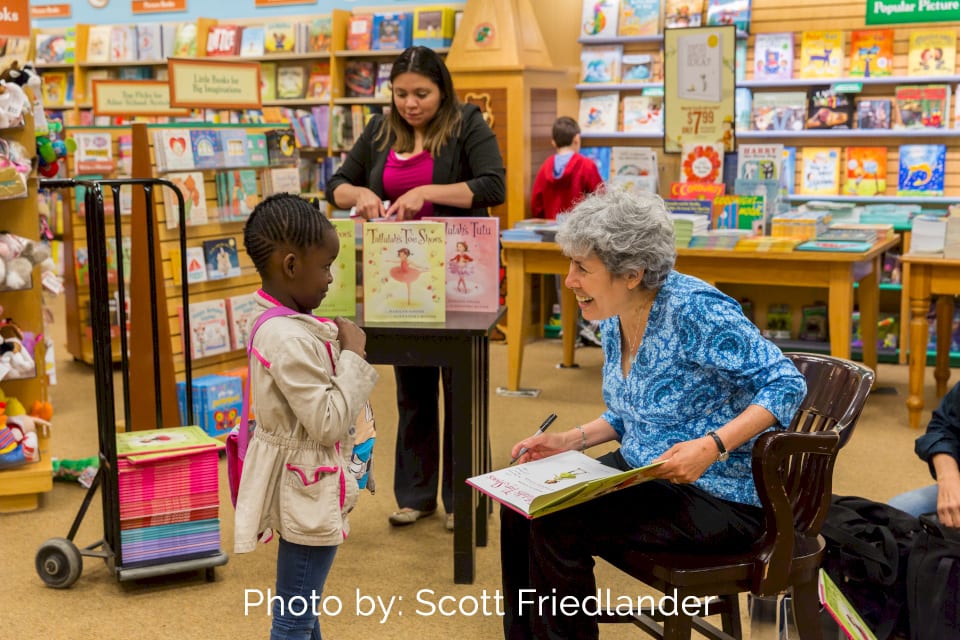
Q: How long is a picture book?
A: The number of words is not the crucial issue. Books range from several words to several thousand (compare Goodnight Moon to The Polar Express). More important is whether or not your book READS like a picture book–succinct, musical, pictorial. A key issue is the fact that picture books are 32 pages (storybooks, which are often fairy or folk tales, are sometimes 48 pages). Leaving space for titles, copyright, etc., your manuscript should break naturally into 28 to 30 pages, or 14-15 “spreads.” Some publishers appreciate authors “dummying” their manuscript–breaking the text into these spreads. Each page should be a “scene.” This is a useful exercise because it shows you whether or not the text has drama and is illustratable.
Q: How long is a middle-grade or young adult novel?
A: As long as it needs to be–mostly. Granted, it might be a bit tougher to sell a story that is especially long or short, but it is even tougher, if not impossible, to sell a book that has been padded or chopped for the sake of hitting a preselected length. A book can be shorter than Sarah, Plain and Tall, or longer than Hitty, Her First Hundred Years. The typical range is 35-65 pages for a chapter book, 45-90 for a low-middle-grade, 90-120 for a middle-grade, 150-250 for a young, young adult, but these are just averages. If you have questions about specific series of books, do some research–read the books, check the catalogues, contact the publisher, etc.
Q: Should I send illustrations with my manuscript?
A: Not unless you are a professional artist. In general, the industry believes that only a rank amateur submits someone else’s art with a picture-book manuscript. A few rare folks have done this and succeeded, but most have not. If a publisher accepts your manuscript, your editor will choose the illustrator. There is NEVER a need for you to hire one.
Q: Is there a good vocabulary list for beginning readers?
A: Some writers and editors think the concept of restricted vocabulary is abominable and most trade publishers do not require a fixed vocabulary. One of the best ways for children to learn new words is by reading them. As long as the difficult words can be understood in context or through other clues, there is no reason not to challenge the reader a bit.
Q: Should I write my picture book in rhyme?
A: It often seems to writers that children love rhyme–and publishers don’t. The truth is that good rhyme is extremely hard to write. Publishers are flooded with bad rhyme. If you can write brilliant verse, you’ve got a chance. If you can’t, chances are you don’t.
Q: What if my story needs a scene about sex, death, etc.?
A: Don’t throw anything in just to flout standards or to shock the reader. But if a scene is true to your story and necessary, put it in. Older YA novels are generally more appropriate for sophisticated scenes. Bear in mind that the response is not always something you can expect. A scene that worries you might be met without comment, while something you perceive as totally innocent can draw an adverse reaction.
Q: What do I put in a cover letter?
A: Keep it simple. Introduce yourself, mention other things you’ve published or a few appropriate credentials (NOT a resume), include the title of the manuscript you’re submitting and, if you wish, a very brief description (“a middle-grade novel about a boy with a problematic nose”) and any special information (“an interactive non-fiction work that could include gatefolds and scratch-and-sniff panels”). Publishers do not want a shopping list of your other manuscripts–just choose one (two at most) and send it.
Q: What do I put in a query letter?
A: Some publishers want advance queries about novels or non-fiction, but rarely about picture books. Other publishers are not interested in advance queries at all. They want you to send the novel or non-fiction book (or proposal), period. Agents usually do want query letters to see if they’re interested in reading the entire manuscript. Think of a query letter as a sales pitch. Be succinct, but intriguing. Include the title and type of manuscript, the number of pages and a short, compelling description. You should also include your credentials. Many publishers and agents prefer a chapter or two with a query letter as well. The publishers and agents will then decide if they want to read the rest of your book.
Q: What goes into a proposal?
A: A proposal is a way of trying to get a contract without writing the whole book. It is generally for a non-fiction book. It consists of a few chapters or spreads and an outline of the rest of the book. Some publishers will consider a non-fiction proposal instead of the whole book. A proposal for a novel may include anywhere from three to six chapters and a synopsis of the remainder of the book. Fewer publishers will consider a proposal for a novel unless you’ve already published with them. For a series proposal, you may usually send one complete book and synopses for others in the series.
Q: How about a fancy presentation?
A: Forget it. A leopard skin cover is more likely to turn off the editor than turn him/her on. Likewise, how you mail the manuscript will not impress the publisher–although, if it’s by FedEx or UPS it may get the work there faster.
Q: How do I know where to send my manuscript?
A: Go to libraries and bookstores and send for publishers’ catalogues. Check out their web sites. Visit the Children’s Book Council web site (www.cbcbooks.org/) and look at the Members list. If you join the Society of Children’s Book Writers and Illustrators (www.scbwi.org), you can get a PDF or hard copy of “The Book,” which includes a complete list of publishers that tells you what they’re looking for and if they’re accepting unsolicited submissions. Attend conferences. Join listservs on the Net. Buy or take out of the library Children’s Writer’s and Illustrator’s Market and/or Literary Marketplace. Gather as much information as you can to learn where your book would make the best fit. Each publisher has a different submissions process, so you will need to research that, as well as their list. A publisher that produces mainly picture books about animals is probably not interested in a young-adult romance. Your book may be unique, but the publisher still has to be able to envision a marketing plan for it.
Q: Will my unsolicited manuscript be read?
A: Probably, if the publisher is accepting unsolicited manuscripts. Research this before you send out your work. Publishers sometimes employ readers and they definitely employ editorial assistants, so don’t expect that your work will necessarily be read by an editor, especially if you send it generically–to the “Children’s Book Dep’t”–or to the editor-in-chief, who rarely has time to read. If you meet an editor at a conference, it’s wise to send your work directly to her/him.
Q: I sent my book in (unsolicited) two months ago and I haven’t heard a word. What should I do?
A: Only two months? Seriously, although a few publishers claim to have a turn-around time of thirty days, and more say two to three months, a growing number list four-six months in their guidelines. Believe or not, established authors often wait six months or more to hear from their editors. Publishers are not deliberately trying to hang on to your manuscripts. The increased turn-around time is due to swelling submissions, decreased staff and general overwork. Research the publisher to find out the projected turn-around time. If that time has passed and you still haven’t heard from the house, you can try the following: send e-mail, a self-addressed stamped postcard or envelope with a note asking whether or not the manuscript is still under consideration. Some writers send a check list on the postcard or return letter: Did my manuscript arrive? Is it still under consideration? Has it been returned? You can also try phoning to ask for a status report. Some publishers don’t mind a phone call; others would prefer a letter. In general, these days you will hear from a publisher only if the publisher is interested in your manuscript. You’re not likely to get said manuscript back. If you receive no reply or if you are told something vague, you are free to send the manuscript elsewhere–if you haven’t already done so.
Q: What about simultaneous submissions?
A: Some editors won’t look at simultaneous submissions. However, with the increased waiting time and the cutting of many lists, most will. You may want to check beforehand, if possible. If you do submit to more than one publisher, the current ethical standard is that you inform each one that this is a simultaneous submission. If you sell the book, it’s polite to let the other publishers know.
Q: Do I need an agent?
A: The juvenile area is one of the few places left where some publishers will look at material that doesn’t come from an agent. However, these days, many publishers will look only at agented submissions (or submissions from published authors). You can find out which will look at unagented or unsolicited material by regularly consulting the membership list at the Children’s Book Council web site or SCBWI’s The Book. Editors will often read manuscripts submitted by attendees of conferences, particularly those held by the Society of Children’s Writers and Illustrators. Science Fiction and Fantasy Writers of America is a useful resource for finding an agent: http://www.sfwa.org/real/ So does the Authors Guild, though you must be a member to access some of their articles: https://www.authorsguild.org/member-services/writers-resource-library/all-about-literary-agents/.
Q: An agent has offered to read my book for a fee. Is this a good idea?
A: No, no, a thousand times no. Agents make their living selling books.
Q: An agent loved my book, and offered to make it even better for a
fee. Is this a good idea?
A: It’s a great idea for the agent. It’s a bad idea for the author.
Q: What about self-publishing my book?
A: Self-publishing is a tricky business. Even if you have the money to produce a book that reads and looks good enough to compete in today’s market, do you have the time to promote it? It is true that nowadays authors do have to put in some time in self-promotion, but the publishers still have reps that go to bookstores; they put ads in magazines, journals and newspapers; they produce a catalogue that is available nationwide; they have booths at ALA, NCTE, and countless other conventions. Ask yourself if you can do as good or better a marketing job before you consider self-publishing or you may face a basement full of boxes of unsold books. Bear in mind, too, that most self-published books do not get reviewed or receive awards. There are, however, a few success stories–books that sold well or led to other book sales. The choice, ultimately, is yours.
Q: I haven’t read any kids’ books recently, but they must be simple to write. Wouldn’t it be pretty easy to knock off a few while I’m learning to write real adult stuff?
A: #$%@@%#$%#!!!
Q: Can I make a lot of money doing this?
A: Who knows? If you become a writer to get rich, you’re probably doomed to grave disappointment. However, the possibility to live off your writing always exists. Just remember that if you sell a manuscript today, that book will most likely not be on the shelves for at least a year. Royalty statements arrive every six months after publication. You get to keep your advance no matter what (make sure that’s in your contract), but you will receive no royalties if the advance doesn’t earn out. And once it is out, depending on its sales, it may not stay in print for long, meaning it may never earn out.
Q: Is there any easy way to break in?
A: Are you the boss’s son or daughter? Are you married to the boss’s son or daughter? Then maybe. Otherwise, the answer is a resounding no. Perseverance, timing, luck are all factors in what is currently a difficult market. We all like to think that good writing will always get published. Sadly, this is not always the case. But things run in cycles and the publishing business is no exception. Be persistent. Be smart. And write the best damn book you can!
Q: What about magazine markets?
A: Magazines are a great place to break in. Learn the basics of marketing. Some magazines buy all rights. That means you can never sell the story again unless you get the rights back. Some magazines pay on publication. That means you won’t be paid until your story appears in print. This could take a year or more.
Q: What about classes and critique groups?
A: A good idea. Harold Underdown has a list of them on his site.
Many colleges offer classes as well.
Q: I’m thinking about taking a correspondence course from the Institute for Children’s Literature. Does anyone know anything about them?
A: The organization is legitimate. Opinions on the value of the lessons varies.
Q: What is the SCBWI?
A: The Society of Children’s Books Writers and Illustrators is a national organization for writers and artists. Anyone can join. The society publishes a newsletter and other resources, which members may obtain online. It is especially well-known for hosting conferences all around the country.
Q: Is there a good book on writing for children?
A: There are many, including:
How to Write a Children’s Book and Get It Published – Barbara Seuling
The Complete Idiot’s Guide to Publishing Children’s Books – Harold Underdown and Lynne Rominger
It’s a Bunny-Eat-Bunny World– Olga Litowinsky
The ABC’s of Writing for Children – Elizabeth Koehler-Pentacoff
Writing for Young Adults – Sherry Garland
The Business of Writing for Children – Aaron Shepard
The Art of Writing for Children – Connie Epstein
A Sense of Wonder – Katherine Paterson
Writing for Children – Catherine Woolley
Writing for Children and Teenagers – Lee Wyndham
Writing Books for Young People – James Cross Giblin
Guide to Writing for Children – Jane Yolen
Writing Young Adult Novels – Hadley Irwin & Jeanette Eyerly
The Children’s Picture Book (How to write it and sell it) -Ellen M. Roberts
How to Write and Illustrate Children’s Books and Get them
Published – Bickwell and Trotman
Career Starter – Laura Backes and Jon Bard
(they also publish Children’s Book Insider; for subscription rates go to: https://writeforkids.org/about/)
Don’t restrict yourself to books on writing for children. A good writing book covering any area is worth reading. Some of the best are:
The Art of Fiction – John Gardner
On Becoming a Novelist – John Gardner
The Art of Dramatic Writing – Lajos Egri
Creating Unforgettable Characters – Linda Seger
A Writer’s Time – Kenneth Achity
The Writer’s Journey – Christopher Vogler
Writing for Story – Jon Franklin
The Elements of Style – Strunk & White
Writing Down the Bones – Natalie Goldberg
Plot Workshop and Character Workshop – Katherine Ploeger
Q: What are some useful web sites for children’s writers?
Children’s Literature Web Guide: https://wiki.ucalgary.ca/page/ChildrensLiteratureWebGuide.html
Children’s Writing Resource Center from Children’s Book Insider
The Former Children’s Writers Chat Gang:
Marilyn Singer–Host
Chuck Galey—Host
Joan Holub–Logger
Donna O’Donnell Figurski–Greeter and Host
Sue Avon –Greeter
David Lubar— FAQ Co-Author and Guest Host
Roland Smith —Founder and Host
Anne LeMieux–Founder and Host
The AOL
Children’s Writers Chat no longer exists, but we remember it with fondness.
This FAQ was written by Anne LeMieux (Swan522), David Lubar (DLubar) and Marilyn Singer (WriterBabe) for the AOL Children’s Writers Chat. Permission to reprint it is granted for non-profit use only, as long as credit is given.
Remember what it’s like to see spring for the first time? To get your first grown-up bed? To run in the park, on the beach, along the Brooklyn Promenade, and never want to slow down? To find sneezes hilarious and wrapping paper the best toy in the world?
To write a good young picture book, you not only have to remember these things, you have to relive them. You have to write with all the skill of an adult who understands words, rhythm, rhyme, character, and story and all the heart and soul of a child who understands joy, anger, sorrow, and wonder in their purest form. It’s the wedding of our present and past selves that allows us to write a good young picture book. Then the illustrator completes the picture in every sense of the word.
Marilyn Singer, BooHoo Boo-Boo. Ill. by Elivia Savadier. HarperCollins, 2002. Didi and Daddy on the Promenade. Ill. by Marie-Louise Gay. Clarion, 2001.
A fabulous young picture book should be the perfect combination of simple, yet fetching art, and lively, memorable text. A young picture book must be MEANT to be read aloud–full of delicious words and phrases that will roll off the tongue and beg to be repeated by the young listener. Repetition, alliteration, rhyme, and animal sounds might all contribute. Best of all, if the book speaks, in some way, to the littlest reader’s experience, it will be a favorite!
Toni Buzzeo. Little Loon and Papa. Dial, 2004. Dawdle Duckling. Clarion, 2003. Both ill. by Margaret Spengler.
A book for the very young should have words that swing and pictures that grab the eye. There should be enough in it that is familiar, to offer comfort, and enough that is new, to spark interest and create a sense of adventure.
Martha Davis Beck. Editor, Riverbank Review.
I think the most important feature for very young children is familiarity with the subject matter. Newborn to three is generally before kids start widening their world to include anything outside family and home. Familiar objects, people, pets, behaviors. Basic fears: of being lost, of the dark, of loud noises like thunder…
Of course there are exceptions to this, but, by and large, children at this very early age are still incredibly self-absorbed, and entertained easily by exploration of self . Reassurance is important, as in all the “Mommy Loves You” types of books.
At three children are still quite literal, so animals and toys can talk, period, and boys can sail off to where the wild things are.
Barbara Seuling. Robert Takes a Stand. Cricket, 2004. Ill by Paul Brewer. Whose House? Harcourt, 2004. Ill. by Kay Chorao.
It’s often said that a good picture book resonates on two levels–for the child and for the adult reading to the child. What’s not said is just HOW a picture book goes about doing this.
I believe there are issues that surface in childhood that continue throughout our lives, and that when we’re eighty, we’re still negotiating these basic issues:
–separation, loss, and reunion;
–dependence vs. independence;
–insecurity (which includes feelings of jealousy, envy, and rivalry) vs. security;
–delayed vs. instant gratification.
The stories that have the most powerful effects on both child and adult are ones that deal with at least one of these lifelong struggles. Though a child’s experiences are different from a 20-year-old’s, and a 30-year-old’s are different from a 40-year-old’s, the same feelings are at the core.
Harriet Ziefert. You Can’t See Your Bones With Binoculars. Blue Apple, 2003. Rockheads. Houghton, 2004.
What makes a good picture book?
1. Rhythm in both text and art.
2. A tight text rich in language.
3. Use of repetition or refrain which encourages the listeners to
participate.
4. A sense of playfulness and joy.
5. And rhyme, when it works, is a plus.
Denise Fleming. Buster. Holt, 2003. In the Small, Small Pond. Holt, 1993. In the Tall, Tall Grass. Holt, 1991.
A good picture book for the young usually is a book that a child doesn’t tire of, that he/she can repeat favorite words or lines from after a reading or two, that uses repetition and chanting rhythmic lines, language play and silly or even more sophisticated and many-syllabled words. Children love to repeat words like “cobbled” or “crumbled,” “trolley” or “bulldozer.” A good picture book reminds children what they already know, making them feel clever; the cat sips milk, the cow sleeps in a barn, the giant stomps, the mice scurry, etc. A good book for the young allows a child to be brave, be smart, be comforted, be funny. If the bear is brave, he/she is. If the giant is smart, he/she is. More than anything, a good picture book brings them into the music or the magic of the moment.
Rebecca Kai Dotlich. Mama Loves. Ill. by Kathryn Brown. HarperCollins, 2004. Away We Go! Ill. by Dan Yaccarino. HarperCollins, 2000.
A great picture book for young children is performance art between two covers. The text must be read aloud, and the words flow off your tongue smoothly and effortlessly, showing you how to say them. My favorite is So Much by Trish Cooke, illustrated by Helen Oxenbury. It has plenty of great sounds that kids can anticipate, and by the third or fourth page they’re chiming in with “DING DONG! “and “SO MUCH.” Turning pages is an integral part of a picture book experience, and pacing is key. It can be jarring if one page has thirty words and the next, only three. And every word in a picture book has to count for something. There’s that great Mark Twain quote about how the difference between a perfect word and a near-perfect word is the difference between lightning and a lightning bug. Nowhere is this more true than in a picture book.
Kate McMullan. Supercat. Ill. by Pascal Lemaitre. Workman, 2002. I’m Mighty! HarperCollins, 2003. I Stink! HarperCollins, 2002. Both ill. by Jim McMullan.
For me, the two things that make a great picture book for the youngest set are simply lovely, lively pictures and lively, lovely text! Or sometimes just lively… and sometimes just lovely!
Both text and pictures have to appeal to the reader as well as (or more than) to the pre-schooler. This applies especially to books for babies where the adult is doing all the choosing. With older pre-schoolers who have a mind of their own, the subject -something they can relate to – Dogs! Trucks! Cats! Planes! Dinosaurs! Kids! — becomes more important, as does a small plot. But always the colorful pictures and the rhythmic, rollicking, rolling or lulling words are what keep youngsters looking and listening and saying: “Read it again!“– as well as keeping the adult reader from going berserk!
Pat Hubbell. I Like Cats. Ill. by Pamela Paparone. NorthSouth, 2004. Trucks: Whizz! Zoom! Rumble! Ill. by Megan Halsey. Cavendish Children’s Books, 2003..
For me a good picture book is one that works on different levels for both the adult and the child. One that can be read over and over and new things can be heard and seen. I also think reading a picture book is a performance. Good picture books often include sounds and phrases that emphasize this performance aspect.
John Coy. Two Old Potatoes and Me. Ill. by Carolyn Fisher. Knopf, 2003. Vroomaloom Zoom. Ill. by Jon Cepeda. Crown, 2000.
I think that the best books for this audience are the ones that tap directly into a young child’s experience, allowing him or her to enter the world the author and illustrator have created, no matter how unusual or fantastical, and to feel at home there. The storytelling should be straightforward and spare and the art needs to be uncluttered and clearly delineated. Repetition and rhymes sharpen the ears and often invite verbal responses. And who can resist opening a closed flap?
Luann Toth. Senior Book Review Editor, School Library Journal.
Lyrical lines, a recognizable sentiment, compression of story, and a character to love.
Jane Yolen. Off We Go! Ill. by Laurel Molk. Little, Brown, 2000. How Do Dinosaurs Say Goodnight? Ill. by Mark Teague. Blue Sky, 2000. Owl Moon. Ill. by John Schoenherr. Philomel, 1987.
One character/point of view/objective.
Concise language that is both descriptive and good for reading aloud.
Art that enhances the text, not that competes with or obliterates it.
Walter Mayes. Walter The Giant Storyteller’s Giant Book of Giant Stories, coming from Walker Books. Valerie and Walter’s Best Books for Children: A Lively, Opinionated Guide, 2nd Edition (with Valerie Lewis). HarperResource, 2004.
The art and text must go hand in hand, like inseparable lovers.
Lois Ehlert. Pie in the Sky. Harcourt, 2004. Waiting for Wings. Harcourt, 2001. Color Zoo. HarperCollins, 1989.
Limits. Good selection. Elimination. Young, in the question posed, I’d take out.
A lot of what you put in, you should take out. Rewrite it until it’s really simple and terse, and if you can communicate an idea with a picture, eliminate the text.
Limit the span of subject at hand, a lot of things often times are better imagined than imaged.
Limited words, it’s a picture book.
Limited palette, clean and bright and simple. Keep it open at the end; it’s nice to want to want it read, again, and again.
Donald Crews. Sailaway. Greenwillow, 1995. Truck. Greenwillow, 1980. Freight Train. Greenwillow,1979.
In a good picture book,
• the illustrator as well as the author has to be a story teller.
• not even one word can be wasted.
• the text and the art need to dance together.
• the design is integral to the story and illustrations. Type should not just be slapped into a space but should be considered by the artist as part of the art; art and type must work together.
• the book should appeal to the adult reader as well as to the child.
Margery Cuyler. Editorial Director, Cavendish Children’s Books.
My first reaction to the question is that a picture book, in many respects, should be treated no differently than an adult novel, a science-fiction novel, a romance novel, a mystery or even a nonfiction biography. At the center, first and foremost, should be a strong character, a character the reader can relate to and care about throughout the story. If not, the reader will slam the book down and walk away.
Of course, what makes a picture book unique is, obviously, the addition of pictures. But pretty pictures will not and should not carry the whole book. The mistake many author/illustrators (and the editors who publish them) make is thinking a series of beautiful pictures will hide a bad story or weak character. The reader will immediately see through that and once again put the book down. It is only in books where the words and pictures are married perfectly, where each is dependent on the other, that a good picture book works. It’s similar to a singer choosing the right song; can we ever hear anyone singing “Georgia” except Ray Charles? Can we ever listen to”What a Wonderful World” without hearing Louis Armstrong? It’s that perfect match of words and pictures together with a strong central character that will make a picture book memorable and rise above all others.
Doug Cushman. What Moms Can’t Do. Simon & Schuster, 2001. What Dads Can’t Do. Simon & Schuster, 2000. Both written by Douglas Wood.
What Is a Good Young Picture Book? Here’s what it’s NOT: boring, maudlin, preachy, flat, confusing, or long-winded. What it IS: brief, original, fresh, often funny, satisfying, and possessed of something substantial at the center–call it a kernel of significance that makes it worth a child’s time. Humor can provide it, so can language, or character, or story. Like the child it’s written for, this picture book can be cozy and quiet or it can sing and swing, but always it loves language. It’s told in words that bear repeating–even a grown-up can savor them again and again. It’s grounded in a child’s own world, the real world or the play world of a young child’s imagination. It’s simple and simply irresistible. And it’s a hair-puller to write.
Alice Schertle. All You Need For a Beach. Ill. by Barbara Lavallee. Harcourt, 2004. 1, 2, I Love You. Ill. by Emily Arnold McCully. Chronicle, 2004.
It’s hard to put it in terms that make sense, but where a picture book differs from the other genres is that its universe has an underlying exuberance that defies containment. Everything is bigger in a picture book–the emotions, the colors, the drama, the intensity. While having the illusion of control, just by their physical brevity, the best picture books actually border on being “out of control.” Who can not turn the page of a good picture book? Once you open the book, there’s no controlling the turn of pages–you have to do it. A perfect example is the work of Denise Fleming–her books spill out of the covers, so that it feels like the action extends beyond the edges of the paper and boards. I love this about picture books–the feeling of vibrancy even in so called “quiet” books. They hum, these books do, even when they are closed.
Kathi Appelt. Incredible Me. Ill. by G. Brian Karas. HarperCollins, 2003. Bubba and Beau, Best Friends. Ill. by Arthur Howard. Harcourt, 2002.
Q: What makes a good young picture book?
A:Humor.
Tedd Arnold. Huggly (The Monster Under the Bed) series. Scholastic, 1997-2004. Parts. Dial, 1997.
There must be dozens of elements that make a very young picture book sing to very young readers. But if I had to isolate just one key ingredient, I’d go with whimsy. A book that draws from its admirers a measurable giggle is a success by any benchmark. So I hope my young reader picture books will always incorporate a little silly.
Kelly Milner Halls. I Bought a Baby Chicken. Ill. by Karen Stormer Brooks. Boyds Mills, 2000.
Cooking up a good young picture book requires several ingredients:
1. Start with something familiar, such as a situation, problem, or feeling that’s universal.
2. Add interesting, unique characters.
3. Combine that with a plot surprise or a twist.
4. Add a dash of humor or rhyme, suit to taste.
5. Sift out anything that doesn’t ring true.
6. Stir until the consistency is just right.
Joan Holub. Somebunny Loves Me. Simon & Schuster, 2003. Eek-a-Boo: A Spooky Lift- the-Flap Book. Scholastic, 2000.
“What make a good young picture book?” Maurice Sendak once said that, with very little people, you need to tempt them into turning the pages to see what’s next, rather than trying to eat the book like a cookie. He was speaking primarily about his drawings, but I think the same holds true for the words. So . . . language that is vital and seductive. Contagious language—words so delicious a young child will wish to taste them, possibly repeat or chant them. A story that originates in the author’s heart, rather than head, since young children are nearly all feeling. And, of course, a wonderful story (in the true meaning of wonderful). A story that stimulates and simulates the fabulous imagination of young children. A “me, me, me!” story–one in which there is barely a boundary between the child who is being read the story and the child or child substitute in the story. In other words, a story into which a young child can easily step in his or her imagination.
As for pictures, they should complete, enhance, and illuminate the meaning of the words. When all is right in a young picture book, the text and the drawings dance together in a kind of waltz or “pas de deux.” Young picture books are important–far more important than they are credited for being. They are, after all, the first books a human being experiences in what, it is hoped, will be a lifetime of reading. So, young picture books have a big job—they must charm and entice a child into hunger for “more, more, more” good books!
Roni Schotter. Captain Bob Takes Flight. Atheneum, 2003. Captain Bob Sets Sail. Atheneum, 2000. Both ill. by Jon Cepeda. Room for Rabbit. Clarion, 2003. Missing Rabbit. Clarion, 2002. Both ill. by Cyd Moore.
Good young picture books appeal to children and adults alike. They usually have bold, brightly-colored artwork, simple language with strong read-aloud rhythm, and overall packages that parents consider a good value in terms of both content and price. Concept-driven books with spare text and clear lessons are just right for preschoolers, who are tackling basic but
important concepts like the association of words to objects, the identification of colors, the concept of counting (1-10). Enhancements like touchable elements, noise-makers, etc., add to reading-time fun, as in Matthew Van Fleet’s exuberant board book Tails, a current New York Times Book Review bestseller.
But by far, I think the most important element of a good young picture book, whether it has an overt lesson or a more subtly-handled message, is that it offer a story or theme that bring parents and young children together. Who wouldn’t enjoy cozying up for a lovely bedtime tale or a fun read-aloud frolic? A great picture book will bring the generations together every time.
Deborah Halverson. Editor, Harcourt.
Picture books must appeal not only to the child, but also to the adult who reads them aloud, or simply hands them joyfully over to the child. It is this combination–the sharing of a loved book–that will have the most impact. When I imagine picture books, I think of the child responding to my delight in the reading, anticipating the turn of each page. In some books, we oooooh and ahhhh over the pictures; in others, it’s the rhythm that has our attention.
Babies like contrasts—shapes, bold colors or black and white. They enjoy photographs…and the rhythm of the voice who shares them. Milne knew abut rhythm for babies. When We Were Very Young, where Jonathan Jo with his mouth like an O and James James Morrison Morrison Weatherby George Dupree reside, are perfect. Goodnight Moon, the standout baby picture book classic, never fails. The art and repetitive rhythm work in perfect harmony, and the book is read again and again to the youngest set.
As children get older, add more busy-ness to their books. Toddlers like to point out items on a page. That’s why Richard Scarry is a classic. Read them stories with repetition or rhyme so they can chime in. Karen Beaumont’s Baby Danced the Polka has toddlers shouting animal names with each new page.
Nothing beats a good tale as children get older. Bob, by Tracey Campbell Pearson and Don’t Fidget a Feather by Erica Silverman are picture books I can count on for success whether I’m reading to one child or to a crowd. They happen to be humorous stories–in pictures and in words–but the important thing is that the text can hold the attention. In my years as a bookseller I’ve seen that appealing illustrations will cause one to pick up a book in the first place, but engaging text is required for it to be chosen year after year.
I don’t believe there is a recipe for a good picture book. The partnership between text and art –each supporting the other–is essential. Children are not fooled by ‘cute’ without a good tale. There is simply no way to get around rich text with illustrations to match.
Valerie Lewis. Co-owner, Hicklebee’s Bookstore. Valerie and Walter’s Best Books for Children: A Lively, Opinionated Guide, 2nd Edition (with Walter Mayes). HarperResource, 2004.
I don’t think there’s one single thing that makes a picture book work for young children. The same could be said of books for any age, including adults. Obviously, with a picture book the art is terribly important and the story should be something that children can relate to. There’s a place in the world for silly books with no message at all, as well as for books which touch on life lessons, environmental issues, or socialization skills. Kids come in all flavors, so it’s important to have books in all flavors too.
Sarah Weeks. If I Were a Lion. Ill by Heather M. Solomon. Atheneum, 2004. My Somebody Special. Ill. by Ashley Wolff. Gulliver Books, 2002. Mrs. McNosh Hangs Up Her Wash. Ill. by Nadine Bernard Westcott. HarperCollins, 1998.
Perhaps I can speak best not as an illustrator of children’s books, but as the child I once was because in that childhood I have very clear personal memories of the books I looked at and whether or notthey invited me more deeply into them through their stories and illustrations. I am fifty–three years old now and grew up in South Africa, so my memories are colored by what books came my way then and there.
I remember being afraid to open the pages of Beatrix Potter books and unable to absorb the charming animal drawings because to see them I had first to look through what I remember as opaque and depressing landscapes. As an adult I searched through her books looking for these landscapes and never found them, yet I know they were there! I remember a small fat pig in a tight jacket running desperately across a somber olive green field, seeming to be nowhere near his home. The panic and claustrophobia I felt almost made me nauseated. This memory serves when I paint and illustrate in that I prefer a light feeling on the page. Life is always in transition, and we should sort of float through the story quite safely, rather than getting bogged down in it.
In juxtaposition, with very simple lines and no color, Ernest Shepherd’s illustrations for the Christopher Robin and Winnie the Pooh books created just that kind of atmosphere. In my imagination I still stand at the edge of that conifer and oak forest, so simply evoked, and hear the wind’s laconic murmur through the branches.
I remember the windy day when Piglet grew very afraid but tried to hide his anxiety, and an open field where someone stole little Roo from Kanga. I may have been anxious but I was also very amused and felt quite safe for all of us. Then there was the turbulent river in which little Roo nearly drowned, but thought he was swimming while everyone tried to save him. I felt always reassured that honey and bread and tea and a warm parlor MUST be nearby.
These characters with all their foibles and fearfulness, silly mock bravado or ability to fool their own selves were perhaps as vulnerable as I was, and thus true friends. Nor were they running away from or toward anything that ominous, and THAT was comforting!
One of the reasons I feel sad about Winnie the Pooh becoming animated and colored, even when drawn well, is what is lost for a child. The wise simplicity of word and line on quiet pages reflects only what is already true for the child who is never too far from home. Leaning up against the reader or snuggled in a blanket listening, he or she has also played Pooh-sticks in that stream.
Elivia Savadier. A Bedtime Story. Written by Mem Fox. Mondo, 1996. The Mysterious Visitor: Stories of the Prophet Elijah. Scholastic, 1997. The Uninvited Guest and Other Jewish Holiday Tales. Scholastic, 1995. Both written by Nina Jaffe.
Published in School Library Journal, April 2010
It was last October, and I was feeling self-congratulatory. I had already booked the 11 participants for the next “Poetry Blast,” the reading by children’s poets at the American Library Association’s annual conference. Once again, we were going to spread the good word that poetry is an aural art.
Then I got an email from Richie Partington, friend, critic, and kids’ lit missionary. He’d been invited to teach a class on children’s and young adult poetry at San Jose State University’s School of Library and Information Science. “What important concepts about poetry would you like library school students to learn about?” he asked.
“Well, Richie,” I started to reply, “as I’ve always said, to appreciate poetry, you have to hear it.” But then all of my assurance went out the window. Surely, I thought, that isn’t the only concept that future school librarians need to embrace. I know firsthand that most kids seem to like poetry. But something amiss happens along the road to adulthood, and many of those same students end up actively disliking poetry or not relating to it. And who can blame them? Poetry is often presented as a rarefied thing that exists only to be analyzed by professorial types or as greeting-card sentiments to be enjoyed by love-struck girls (and the guys who hit on them). So, I mulled, what can librarians do to buck this trend? I know! I’ll ask some other poets who write for young readers.
One of the first to respond was poet-photographer Charles R. Smith, Jr., whose latest book, My People (S & S/Atheneum), nabbed the 2010 Coretta Scott King Illustrator Award, thanks to his stunning photos. He immediately came up with a grand mantra: “Poetry needs to be taken off the pedestal.” He adds, “While poetry month is a good idea in theory, it ultimately confines poetry to that one month. As a black poet, I’m busy in February [Black History Month] and April [National Poetry Month], but I’m still a black poet the other 10 months of the year!” The solution? “By exposing students to poetry on a daily basis, by connecting it with their everyday lives, they begin to see the beauty and value in words,” says Smith.
Yes! I agree. And so does Julie Larios. Perhaps “librarians don’t use more poetry because they’re afraid of it,” and some believe it’s “nowhere near as sturdy as fiction or nonfiction… or it’s too cute, maybe, for kids,” says Larios, winner of the 2006 Pushcart Prize for poetry and a teacher in Vermont College’s Writing for Children program. “That’s why poetry comes out for only one month of the year and at holidays. I would love to have librarians stop thinking poetry should only be about snowmen, hearts, dancing flowers, bunnies, ice cream, witches, pumpkins, turkeys, jingle bells, and the wind.”
The beautiful thing about poems is that they can be enjoyed on many levels, and they can create so many connections. Not only are there poems that tie into any subject—from science to social studies—but there are all types of poems for all types of people. “The most important concept I’d love to see librarians and media specialists embrace is that poetry is available for everyone—from the rainbow-unicorn-loving kids to the goth kids,” says Laura Purdie Salas, the author of Stampede! Poems to Celebrate the Wild Side of School (Clarion, 2009). “Library holdings that reflect a wide array of styles and moods are so great for young readers. Let them read silly and serious, escapist and thought-provoking, rural and urban poetry. Show them passionate and sarcastic poems. If we can share enough kinds of poems with children, I think all kids can find themselves somewhere in them.”
What’s the best way to present poetry? Monica Gunning, a former elementary school teacher, remembers what her famed poetry instructor, Myra Cohn Livingston, used to say: “Poetry invites children to participate in the delights of bounding rhythm, to clap their hands, to tap their feet, move their bodies if they wish to do so.” And Joan Bransfield Graham, whose concrete poems take on the shape of what they’re describing, endorses a similar strategy. “Begin with the pleasures and joy of poetry—luxuriate in it—the rhythms, rhymes, luscious language and playfulness,” she says. “I love to do poems in an interactive call-and-response way so that children can be part of the poem.”
Kristine O’Connell George thinks that Charlotte Huck, the late children’s literature expert, would have approved of these kid-friendly approaches. “Huck recommended reading poems at least twice—not only to allow a child time to revel in the language but also to create an opportunity for the child and the poem to connect,” says George, who served as poetry consultant for Storytime, a PBS series aimed at turning young kids into lifelong readers. “Charlotte saw children as active participants in the poetry experience and honored their ability to have a personal encounter with a poem without adult interference.”
What other strategies work with young readers? Joyce Sidman, a two-time Cybil Award winner, offers some road-tested advice. “I try to avoid the phrase ‘What does the poet mean when she says?’ I think we need to start with asking questions about a poem: What pictures does this poem paint in your head? What words do you like? What don’t you understand? What surprises you? How does this poem make you feel?”
Another surefire way to connect kids to poetry is to ask them to tuck a favorite poem inside a library book. That way, when their classmates pick up a novel or nonfiction book, they’ll also have a poem on hand, says Lee Bennett Hopkins, winner of the National Council for Teachers of English 2009 Award for Excellence in Poetry for Children. “Librarians can encourage readers to add another poem,” he explains. “Within months one novel might have three, four, or more verses relating to the plot, characters, or setting inside its covers for future readers to enjoy.” As an alternative to leaving a poem, kids can keep the ones they find. After all, who doesn’t love a freebie—especially one that has just “turned up” in a book, perhaps with the title “Take This Poem.”
Hopkins’s anthologies, which feature the works of diverse groups of poets writing in a variety of forms on a range of subjects and themes, also help students connect with poetry, as do those compiled by Jack Prelutsky, Bobbi Katz, Betsy Franco, Mary Ann Hoberman and Linda Winston, and many others. So much wealth is contained in anthologies such as Hopkins’s Sharing the Seasons (S & S, 2010), Prelutsky’s The Beauty of the Beast (Knopf, 1997), Katz’s Pocket Poems (Dutton, 2004), Franco’s You Hear Me? (Candlewick, 2001), and Hoberman and Winston’s The Tree That Time Built (Sourcebooks, 2009)! And, as Susan Marie Swanson, whose The House in the Night (Houghton), illustrated by Beth Krommes, snagged the 2009 Caldecott Medal, points out, anthologies don’t demand to be read from cover to cover. There’s a freedom in knowing that you can start in the middle of a collection or skip around.
Anthologies also provide a great service by introducing young readers and librarians to the many talented poets who aren’t household names. After all, with all due respect to the creator of The Giving Tree, “there is life after Shel Silverstein!” says poet and literacy specialist Tracie Vaughn Zimmer. “While kids do love humorous verse, it’s also important to show them why adults turn to poetry whenever the world weighs heavy on their shoulders, how words become a refuge. We do children a disservice when we only show them poetry that is funny and rhymed.”
To help kids discover new poets, Juanita Havill, the editor of Book Love (Phoenix College, 2000), suggests grouping individual collections alongside anthologies. J. Patrick Lewis, who has written poems about everything from Blackbeard to an underwear salesman, and Swanson, who works with kids in the Twin Cities’ schools, are big fans of creating a “poetry corner,” where rotating groups of books are constantly on display.
And how about making poetry trading cards? It’s another way to fall in love with poems and the poets who write them. Plus, it’s easy to do. Start by asking your students to find a poem they like in an anthology. Then have them find a book written by the same poet and pick out another poem that appeals to them. Next, kids can copy their poems on blank cards and illustrate these with their own drawings or pictures from old magazines. Finally, it’s time to trade. If students don’t like the poems they receive, they can keep trading for another one.
Trading poems is one way to fall in love with poetry and the poets who write it. Another method is former lawyer–turned–children’s writer Janet Wong’s “poetry suitcase.” Kids get roughly 15 minutes to look through poetry books, select poems, and write them on index cards. Then students take their poems home. A week later, they bring back their cards, each tied to a prop. For example, a poem about the wind might be attached to a broken umbrella, or one about a birthday party might go with a balloon. Then the props and poems go into a suitcase. When there’s a spare minute, the librarian lets a student choose a poem from the suitcase and read it aloud.
David Harrison, who has the distinction of having had an elementary school, in Springfield, MO, named after him, knows of a teacher who hosts “Fishbowl Fridays.” Her students drop their favorite poems into a fishbowl, and at the end of the week, she draws out a few for her kids to read aloud. With permission from colleagues, the teacher then brings the kids to other classrooms to read the poems aloud.
All of these activities show that poems are something to enjoy. As Naomi Shihab Nye, who’s new book, Time You Let Me In: 25 Poets Under 25 (Greenwillow, 2010), features the creations of some exciting young talents, says, “Poetry is fun… sometimes people just need to be reminded.” And, she adds, “it’s even ‘fun’ to express painful things with clarity, sometimes. More fun than not speaking.”
Taking an even broader view of what librarians can do to spread the gospel of poetry, Larios sees both libraries and poems as “community builders” and suggests that poetry and prose can be presented in conjunction with a wide range of hot topics and events—everything from a discussion of climate change to the opening day of the baseball season. “Can you imagine what the local media would do if they heard that a branch library, on the occasion of a global conference on climate change, had organized a reading of nature poetry and passages from Walden—and that the readers included kids?” asks Larios. “Wouldn’t that be wonderful?”
So, that brings us back to my own mantra: poetry demands to be heard. In fact, “kids have more trouble reading a poem than hearing it,” explains Jane Yolen, whom Newsweek magazine dubbed America’s Hans Christian Andersen. “So read these things aloud. First you, then a single child, then the entire class—then you again. Heard that often, the poem will have wormed its way into the child’s ear.” What a marvelous way to take poetry off that pedestal and make it live among us—warm and welcome.
But don’t just take my word for it. Here are some additional ideas from my fellow poets…
Betsy Franco (www.betsyfranco.com)
“I purposely wrote a collection of school poems for two voices, Messing Around on the Monkey Bars, to encourage children to read poetry out loud.”
Kristine O’Connell George (www.kristinegeorge.com)
“Read my book Toasting Marshmallows by flashlight with the lights off or by a faux bonfire made of twigs and red cellophane.”
Joan Bransfield Graham (joangraham.com)
“My ‘Popsicle’ poem from Splish Splash is fun to do in “call and response.” On my Web site, I provide schools with a master for “Popsicle” bookmarks so they can run them off in their favorite flavors.”
Monica Gunning
“Many poems in my books are good for dramatizing. For example, I have children take off and carry their shoes during “Walking to Church” from Not a Copper Penny in Me House.”
David Harrison (davidlharrison.wordpress.com)
“I share poems from my autobiographical collection, Connecting Dots. Then we start lists of what the students remember of their past experiences, and they write their own memory poems.”
Juanita Havill
“I have kids dramatize the scarecrow poem, ‘The Monster,’ from my book I Heard It from Alice Zucchini. I bring in a costume and invite someone to play the scarecrow. Others students get to be the various vegetables and birds that appear in the poem.”
Lee Bennett Hopkins
“I use ‘Let’s Talk’ by Rebecca Kai Dotlich from my collection Wonderful Wordswith children of all ages. The verse opens up so much discussion with readers about things they want to talk about.”
Bobbi Katz (www.bobbikatz.com)
“In my book More Pocket Poems, the opening piece speaks of what can only fit in a pocket when tucked in a poem. I suggest kids go on a treasure hunt for poems about animals, objects, emotions, etc., that those poems make portable.”
Julie Larios (julielarios.blogspot.com)
“My book Imaginary Menagerie is filled with questions. We explore them, and then I have kids write poems that must include at least two questions.”
J. Patrick Lewis (www.jpatricklewis.com)
“I recite riddle verse from my books such as Spot the Plot or Scien-trickery. Kids get to be a part of the action when they can shout out their guesses.”
Naomi Shihab Nye (www.barclayagency.com/speakers/naomi-shihab-nye)
“I suggest using The Way It Is, by William Stafford, to get kids’ brains on their ‘poetry channel’ and also Salting the Ocean: 100 Poems by Young Poets, which I edited.”
Laura Purdie Salas (www.laurasalas.com)
“With my book Stampede! I find that kids love to do different voices, bark and oink, call out the rhyming words, and do hand motions.”
Joyce Sidman (www.joycesidman.com)
“For a discussion starter, pair the poem “This Is Just to Say” by William Carlos Williams with my book This Is Just to Say: Poems of Apology and Forgiveness. As an added activity, have participants try their hand at an apology poem.”
Marilyn Singer (marilynsinger.net)
“Have kids do paired readings of the reversos from my book Mirror Mirror,acting out the fairy tale characters.”
Charles R. Smith, Jr. (www.charlesrsmithjr.com)
“I perform Langston Hughes’s My People, a book with photos by me. Teachers and librarians can use it with kids to get them to describe themselves or friends and family.”
Susan Marie Swanson (www.susanmarieswanson.com)
“I encourage discussion by showing connections. For example, I pair my picture book To Be Like the Sun, which is addressed to a sunflower, with ‘Sandia,’ a poem addressed to a watermelon, from Gary Soto’s Canto Familiar.
Janet Wong (www.janetwong.com)
“Start your ‘poetry suitcase’ with a dog toy and a selection such as ‘Dog’ from my book Twist or poems from Douglas Florian’s Bow Wow Meow Meowand Kristine O’Connell George’s Little Dog Poems.”
Jane Yolen (janeyolen.com)
“I tell kids to pick a poem to set to music and record it for the class. For example, several of my poems in Dinosaur Dances have been recorded by Lui Collins.”
Tracie Vaughn Zimmer (tracievaughnzimmer.com/TVZ/HOME.html)
“Have students try writing an ode to poetry like my poem ‘The Poems I Like Best’ from 42 Miles.”
For more ideas check out Hopkins’s Pass the Poetry, Please (HarperCollins, 1998) and Sylvia Vardell’s Poetry Aloud Here! (ALA Editions, 2006).
1. Pay attention to the world around you—little things, big things, people, animals, buildings, events, etc. What do you see, hear, taste, smell, feel?
2. Listen to words and sentences. What kind of music do they have? How is the music of poetry different from the music of songs?
3. Read all kinds of poetry. Which poems do you like and why?
4. Read what you write out loud. How does it sound? How could it sound better?
5. Ask yourself: does this poem have to rhyme? Would it be good or better if it didn’t? If it should rhyme, what kind of rhyme would be best? (For example, 1st and 2nd lines rhyme; 3rd and 4th lines rhyme—“Roses are red/So is your head/Violets are blue/So is your shoe”; or 1st and 3rd lines rhyme; 2nd and 4th lines rhyme—“What is your name?/Who is your mother?/This poem is quite lame/I should try another.”
6. Ask yourself: does this poem sound phoney? Don’t stick in big words or extra words just because you think a poem ought to have them.
7. A title is part of a poem. It can tell you what the poem is about. It can even be another line of the poem.
8. Before you write, think about what you want your whole poem to say.
9. If you end up saying something else, that’s okay, too. Poet X.J. Kennedy says, “You intend to write a poem about dogs, say, and poodle is the first word you’re going to find a rhyme for. You might want to talk about police dogs, Saint Bernards, and terriers, but your need for a rhyme will lead you to noodle and strudel. The darned poem will make you forget about dogs and write about food instead.”
10. Go wild. Be funny. Be serious. Be whatever you want! Use your imagination, your own way of seeing.